.png)


How gender sorting redefines broiler production strategy
In an industry perpetually seeking marginal gains, the advent of automated broiler gender sorting transcends mere operational enhancement, fundamentally reshaping the strategic landscape of poultry production.
For decades, broiler farming has grappled with the inherent biological variability between male and female birds, a challenge that has historically necessitated compromises in nutrition, management, and processing efficiency. However, with technologies like Ceva’s Genesys® feather sorting automation, this variability is no longer a limiting factor but an opportunity for unprecedented precision and strategic advantage.
At its core, gender sorting is not merely a hatchery procedure; it is a foundational strategy for precision management across the entire integrated broiler system. This insight marks a significant departure from traditional approaches, where mixed-gender rearing often led to suboptimal outcomes for both genders.
By accurately separating male and female chicks at hatch, producers can unlock the full genetic potential of modern broiler strains, tailoring every subsequent stage of production to the specific biological needs of each gender.
This targeted approach allows for the optimization of growth rates, feed conversion ratios (FCR), and overall flock health, transforming the entire value chain from a reactive system to a proactively managed, highly efficient operation.
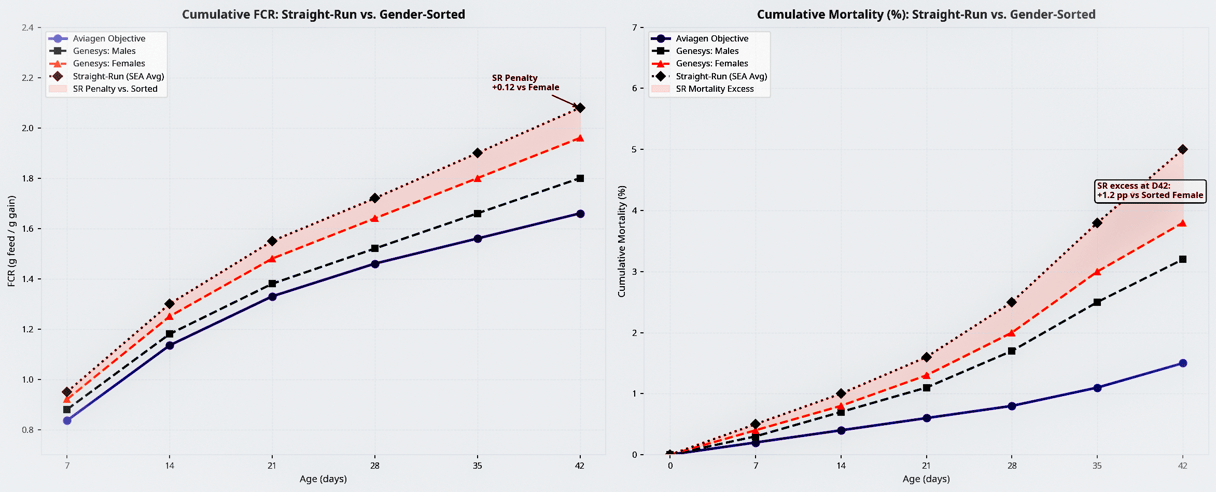
Straight-run vs Genesys gender-sorted: FCR & mortality comparison (Ross 308)
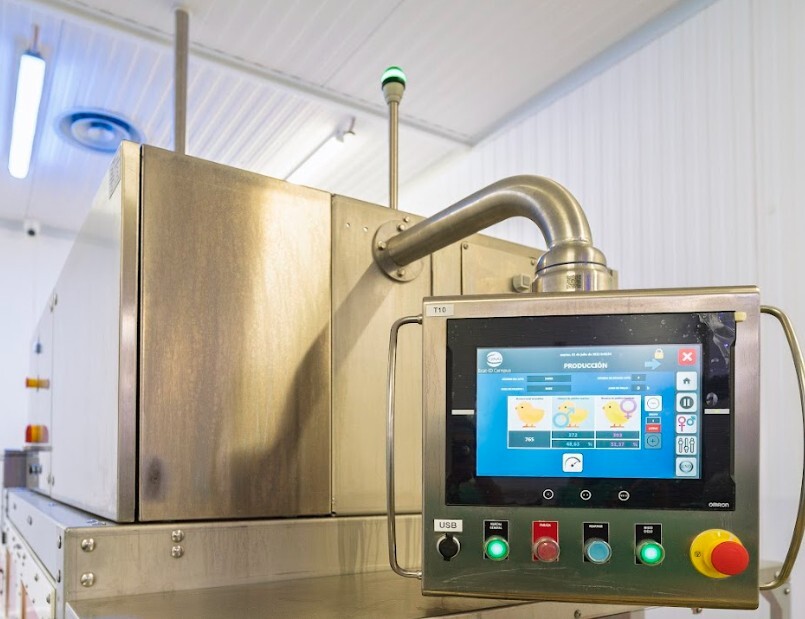
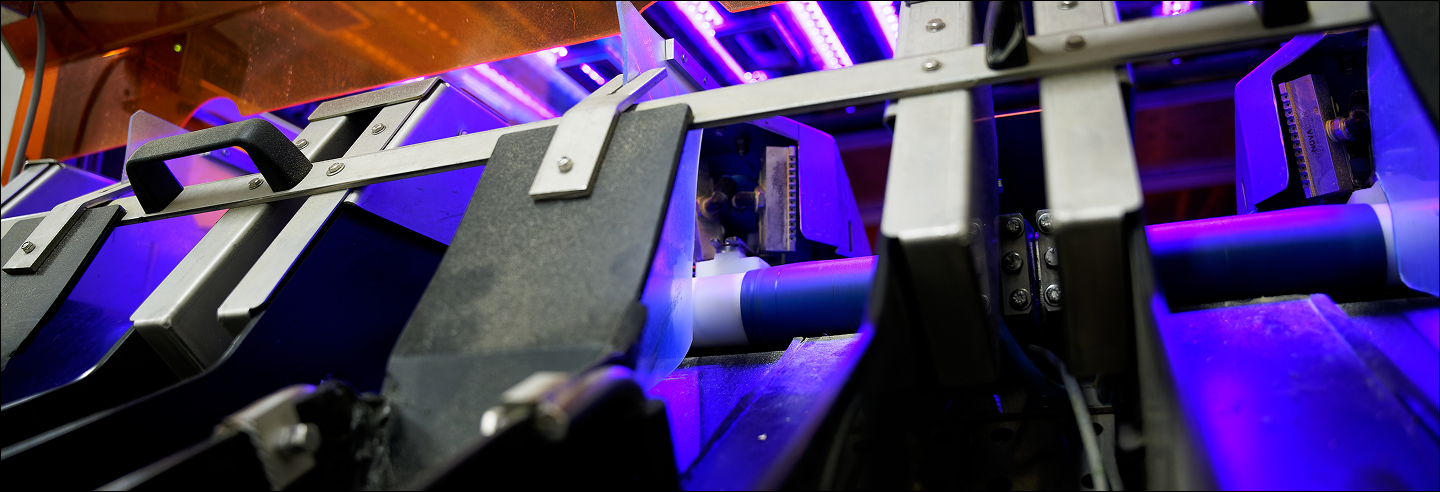
Supporting this paradigm shift is the remarkable accuracy and efficiency of modern automation. Ceva’s Genesys® system, for instance, boasts a consistent accuracy of over 97% in identifying broiler males and females.
This high degree of precision is critical, as even minor misclassifications can undermine the benefits of gender-separate rearing. Furthermore, the automation addresses significant labor challenges within hatcheries. Manual gender sorting is a labor-intensive process, typically limited to approximately 2,500 birds per hour per operator.
For large hatcheries processing millions of chicks weekly, this necessitates a substantial workforce, often comprising 16 to 20 operators, making it susceptible to labor scarcity and inconsistency.
Automated systems, by contrast, can process chicks at significantly higher speeds, with some automated systems exceeding 50,000 chicks per hour per module, while maintaining superior accuracy and consistency, thereby mitigating the disruptive impact of staff turnover and reducing operational costs.
Straight-run vs Genesys Gender sorted: Body weight divergence & CV% over time (Ross 308)
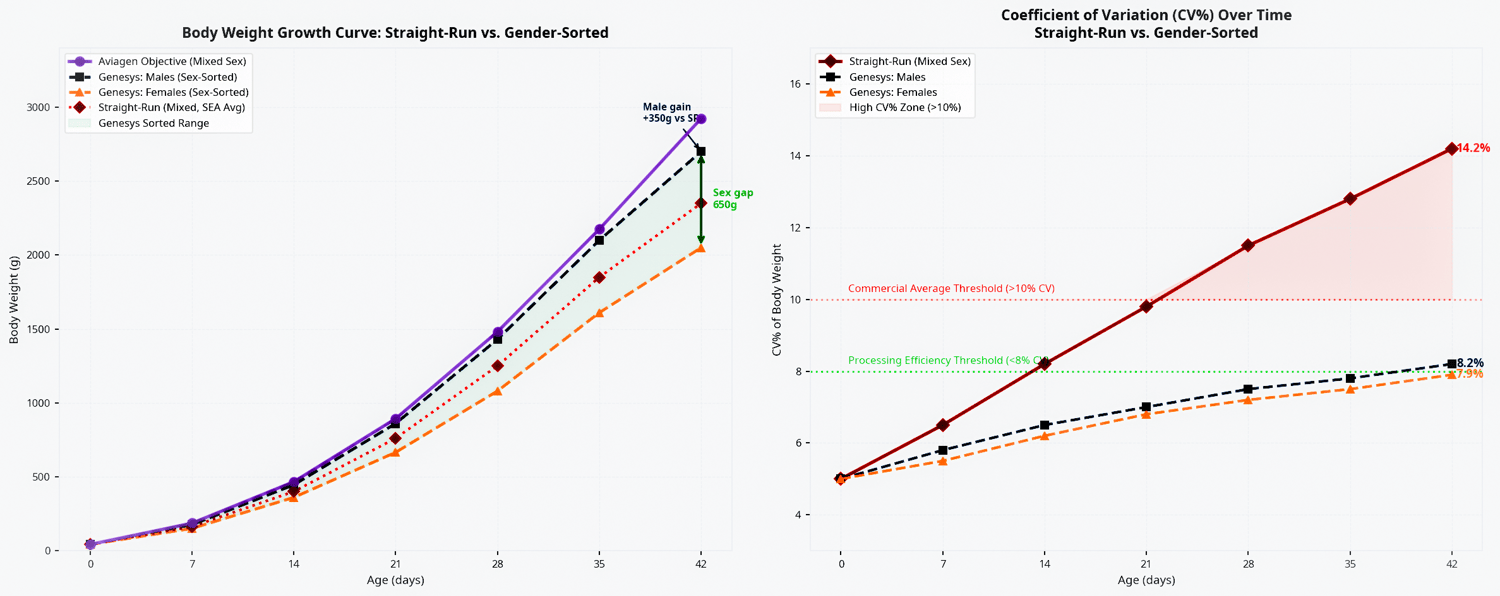
The strategic implications of this precision extend throughout the broiler value chain. On the farm, gender-separate rearing enables the implementation of tailored nutritional programs, providing males with higher-protein diets to support their rapid muscle accretion and females with optimized diets to prevent excessive fat deposition.
This not only improves FCR but also contributes to more uniform flock development, a critical factor for downstream processing. In the processing plant, the enhanced uniformity of gender-sorted flocks allows for the precise calibration of high-speed automated lines, reducing mechanical errors, minimizing carcass contamination, and maximizing yield in both primary and secondary processing. Ultimately, this leads to a higher percentage of premium-quality meat products and a significant reduction in downgrades, directly boosting overall profitability.
The clear takeaway is that integrating automated gender sorting, particularly with advanced systems like Ceva's Genesys®, is a strategic imperative for modern broiler operations. It moves beyond incremental improvements, offering a comprehensive solution that addresses biological variability, labor challenges, and efficiency bottlenecks across the entire production cycle.
This unified strategy provides a competitive advantage, enabling producers to meet stringent customer specifications, enhance product quality, and drive sustainable financial growth in an increasingly demanding market.